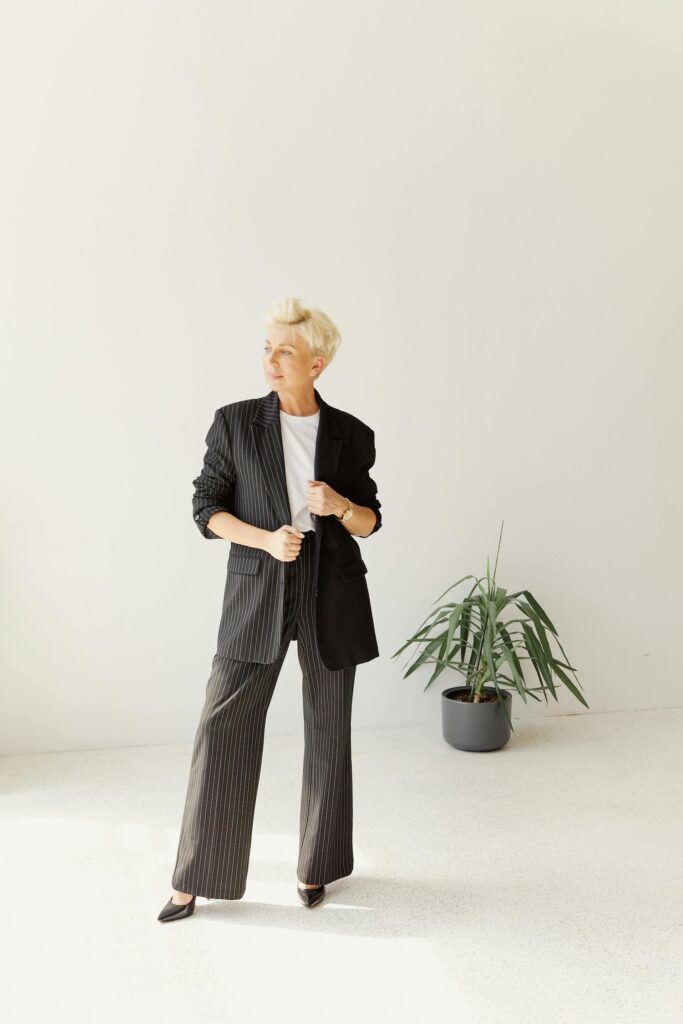
A Quiet Morning Closet Moment
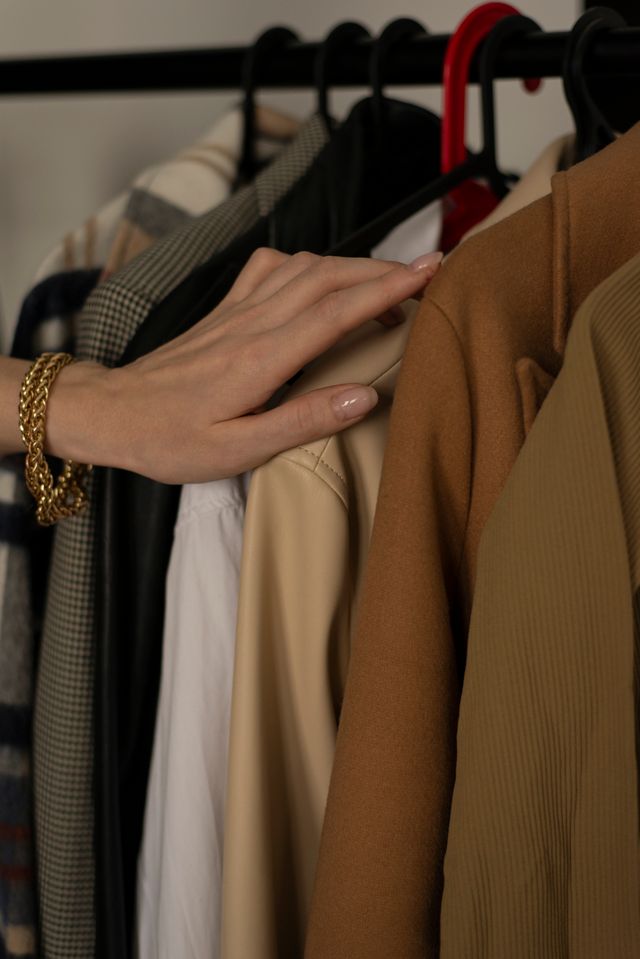
There is a particular kind of tired that has nothing to do with sleep. The Modern Classic Work Formula exists to solve exactly this — in under a minute, not twenty.
It’s standing in front of a full closet, ten minutes before you need to leave, still not sure what to wear. Not because you own too little. Often it’s the opposite — too many options, none of them decided. So you reach for the same three outfits on rotation, not because they’re your favourite, but because they’re safe.
Here’s the rule that solves this, and it’s simpler than it sounds:
Structure signals intention. One structured piece, added to anything, makes an outfit read as decided rather than defaulted.
That’s the whole principle behind this formula. You don’t need more clothes. You need one repeatable equation you can return to on the mornings when deciding feels like too much.
The Modern Classic Work Formula Flat-Lay
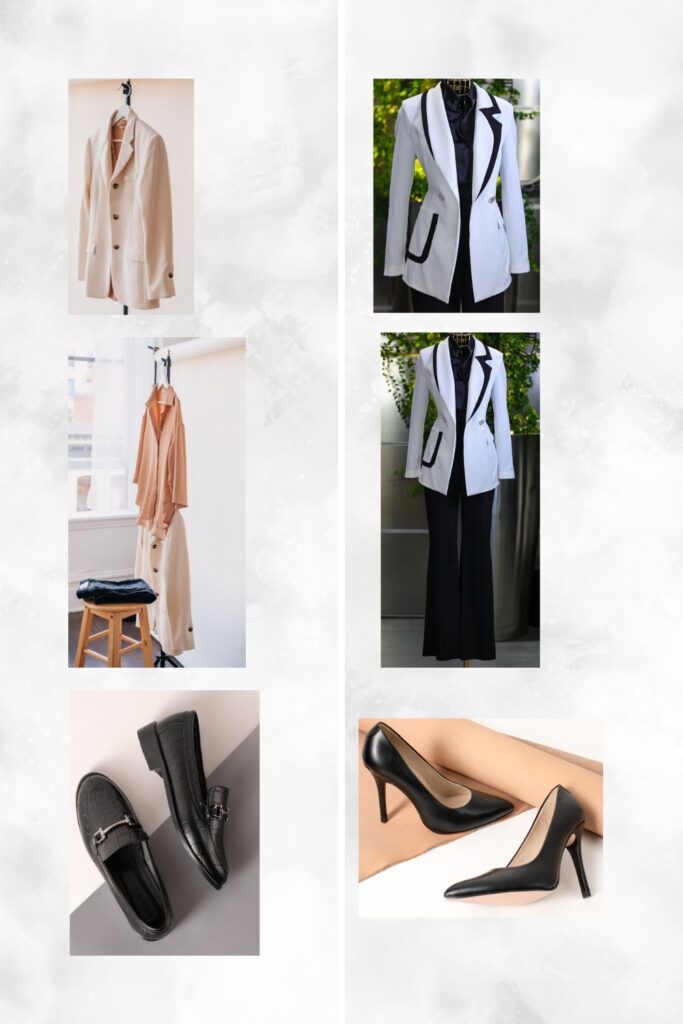
Blazer + Silk Blouse + Tailored Trouser + Loafer or High Heel + One Considered Accessory
Five pieces. No decision fatigue. Every time.
Why Each Piece Earns Its Place
The blazer is doing the real work here. It’s the structured piece — the one that tells the room you decided to look like this, rather than simply ended up here. Camel, navy, white or charcoal will outlast almost anything trend-led.
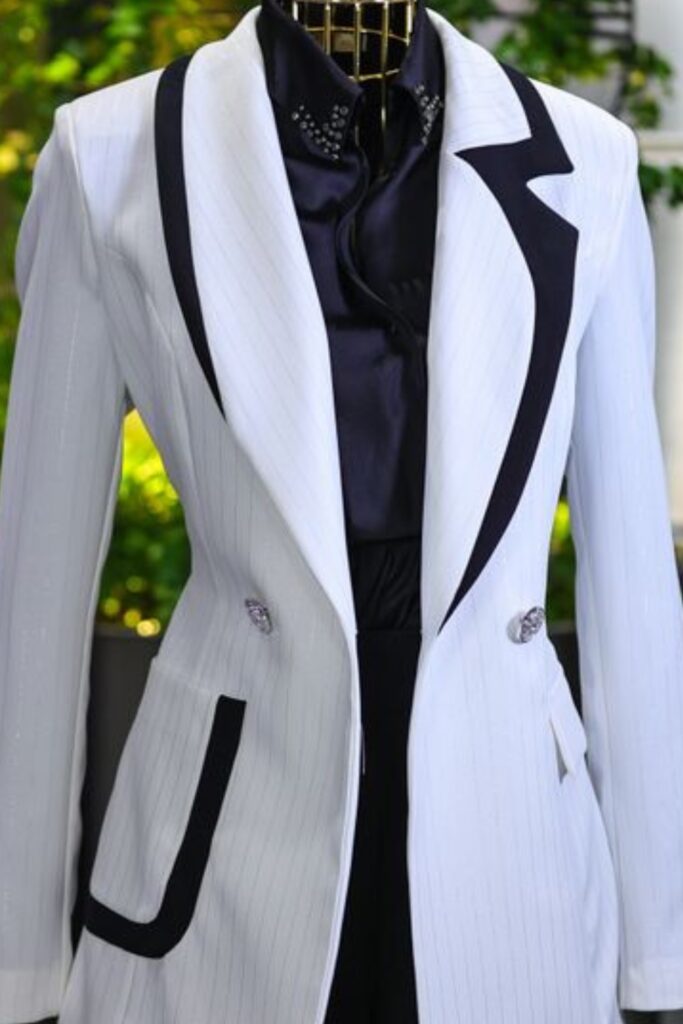
The silk blouse softens the structure underneath. Without it, a blazer can read stiff. With it, the whole outfit gains movement — something that catches light slightly when you walk, rather than sitting flat.
Structure meets Softness
The tailored trouser is where most outfits quietly fall apart. A trouser with the right break at the ankle changes an entire silhouette; too long or too short undoes the polish the blazer just built. Ankle-length, straight or slightly wide, is the safest formula for most builds.
The loafer or the high heel isn’t really a footwear choice — it’s a mood choice. Loafers say capable and grounded. A high heel says sharper, more formal. Same formula, same blazer, entirely different sentence depending on which you choose.
The one considered accessory is a boundary, not an afterthought. One watch. One structured bag. One pair of earrings. The formula fails the moment this becomes three accessories instead of one — the structure gets buried under noise. If you’re tempted to add a second, ask which one is actually doing something for the outfit, and let the other one wait for a different day.
Putting It To Work
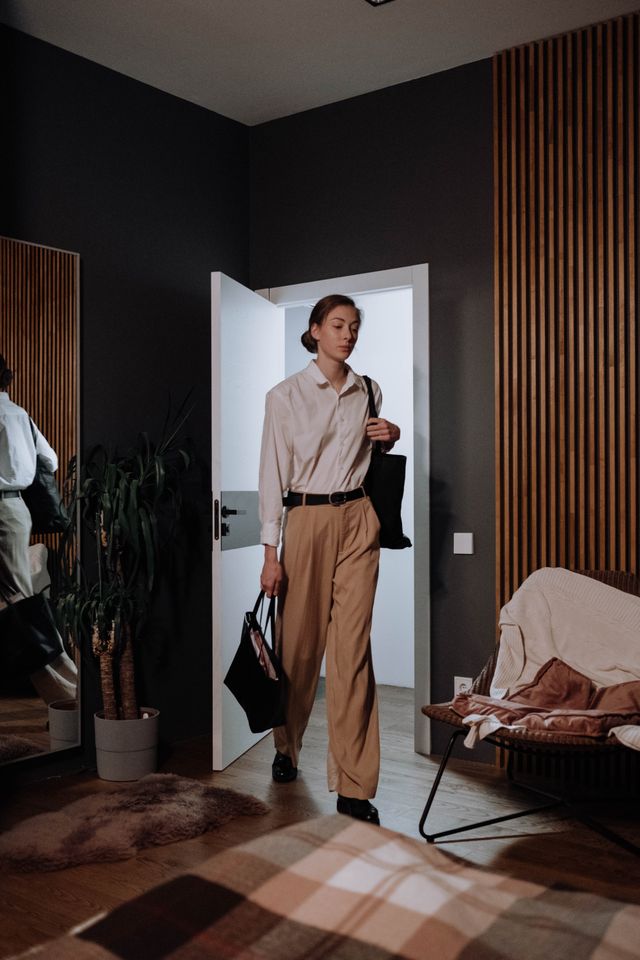
This isn’t a uniform. It’s a foundation you adjust by mood and occasion. A client presentation might call for the heel and a structured tote. A quieter admin day might call for the loafer and a softer bag. The formula stays the same — only the volume changes.
What makes this different from simply “getting dressed” is that you’re no longer deciding from scratch each morning. You’re filling in a formula you already trust.
That’s really what separates the Modern Classic Work Formula from a passing style tip. A tip fades once the season changes. A formula gets better the more you use it, because you start to notice which version of it fits which kind of day — and that instinct, once it’s built, never really goes away.
Try This Today

Open your closet and find your blazer — just one, whichever feels most like you. Now find one silk or fine-knit top, one tailored trouser, and one pair of shoes that already exist in your wardrobe. Put them together exactly as written above.
Notice what’s missing: the ten minutes of second-guessing. The formula already made the decision. You’re simply wearing it.
If this felt useful, When Less Was Enough explores the deeper philosophy behind why fewer, well-chosen pieces make mornings like this easier — and The Curated Edit has more pieces to build this formula around.
Ready to remove decision fatigue from your entire morning, not just your outfit? The Effortless Morning Formula walks you through it, start to finish.